
Laser cutting has been used in sheet metal working for many years, but the technology has advanced considerably during that time. Today’s fibre laser machines work in conjunction with digital production systems in a way that was not previously possible.
This development is not just about new machinery. The entire production flow has changed, from how drawings are handled and materials are planned to how components are produced and tracked throughout the manufacturing process.
A clear difference compared with older technology is the ability to process more materials and a wider range of sheet thicknesses.
Today’s fibre laser machines can process everything from hot- and cold-rolled sheet metal to stainless steel, aluminium, copper and brass. This means that more types of components can be produced in the same production environment without the technology imposing the same limitations as before.
At the same time, these developments have made it easier to adapt production to different types of projects and components.
Another major difference is how production is planned.
Previously, several stages of the process relied on manual steps between the design and manufacturing stages. Today, CAD/CAM systems and ERP systems can be linked so that designs, materials and production planning follow the same workflow.
This means that planning and production are naturally linked, reducing the need for manual steps between the various stages.
Older laser cutting techniques could produce good results, but today’s technology makes it possible to maintain consistent precision even when the same part is produced time and time again.
This becomes particularly important when components are later to be to be press-brought, are welded or assembled together with other components. When the dimensions are consistent right from the start, it makes it easier to proceed to the next stage of production.
Precision therefore affects not only the laser cutting process itself, but also the functioning of the rest of the production chain.
This development has also led to laser cutting considerably more flexible.
A modern machine park can switch between different materials, component types and production volumes with considerably less changeover time than before. This means that the same production environment can be used for everything from prototypes and small batches to repeat production and larger volumes.
If, for example, a company needs to produce a small number of parts to test a new design, and later wishes to move on to a larger production run, the same technology can be used throughout the project. Similarly, it is possible to switch between different materials or components without having to completely overhaul the production process.
This increased flexibility makes it easier to manage projects with varying requirements and changing needs over time.
One of the biggest changes is that laser cutting is now part of a wider digital production workflow.
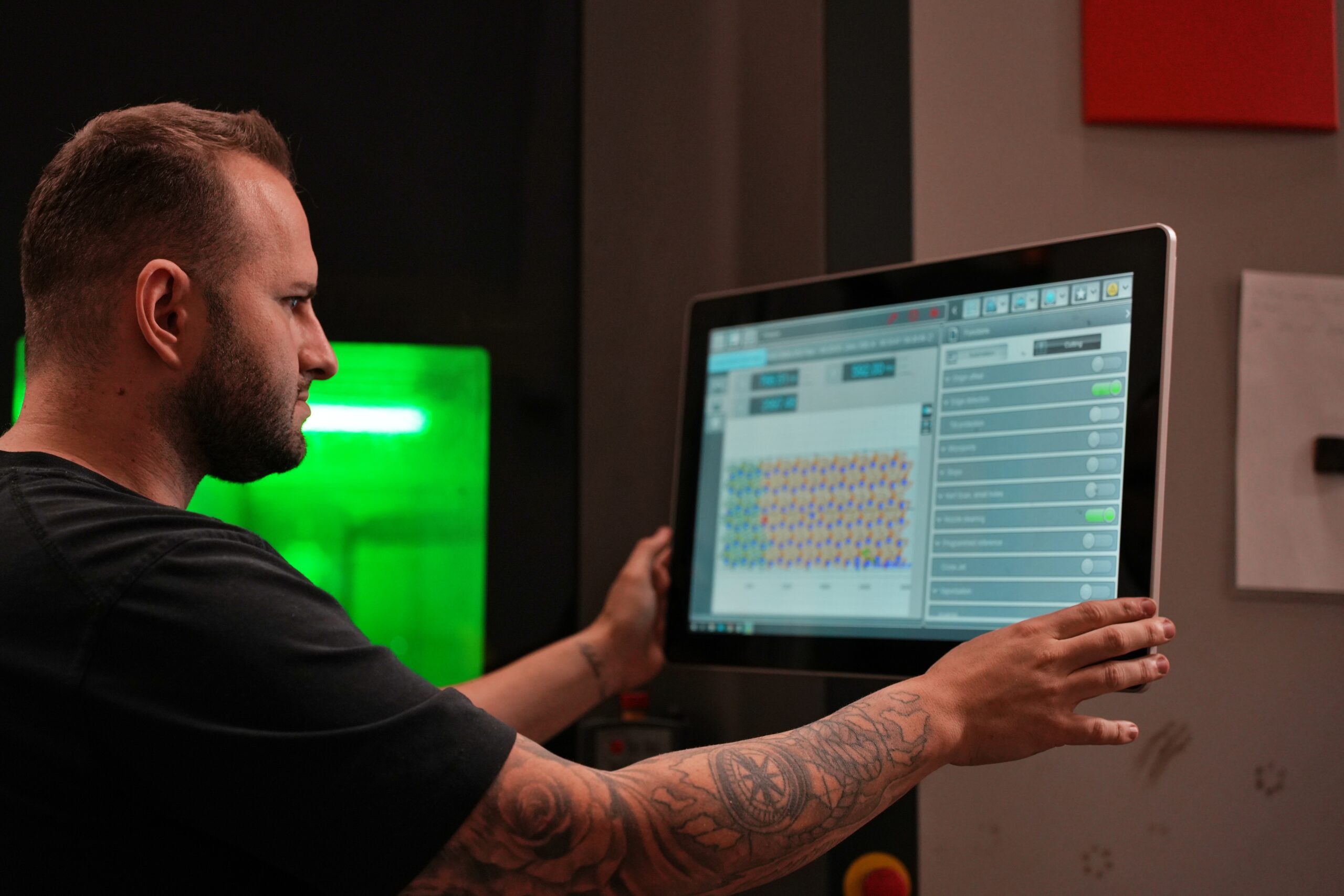
At Linde Maskiner, we use, amongst other things, 8 kW and 4.4 kW Bystronic fibre laser machines in conjunction with integrated ERP and CAD/CAM systems. This enables the planning and production departments to work together throughout the entire process.
Our laser cutting services include, amongst other things:
Advances in laser cutting are not just about more powerful machines. The combination of modern fibre laser technology, digital planning and extensive experience makes it possible to handle a wide variety of projects with consistent results.
Do you have a project where laser cutting might be suitable? Here at Linde Maskiner, we help businesses with everything from one-off parts to regular production runs.
Contact us At Linde Maskiner, we’ll review your requirements and help you find a solution that suits your project.
Phone: +46 581 883 00
Email: info@lindemaskiner.se
Invoices: faktura@lindemaskiner.se